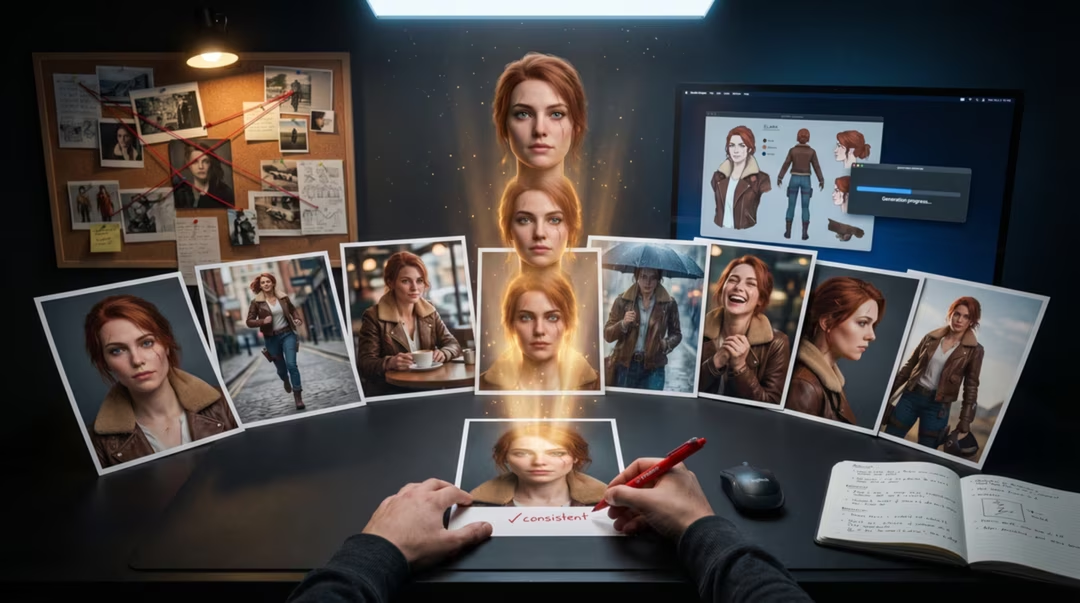
Key takeaways
- Write one fixed description block and reuse it verbatim — change only pose, light and setting.
- Anchors beat adjectives: a signature detail (scar, hairpin, eyewear) does more than “beautiful.”
- Reference features (style/character refs) raise the ceiling but don’t replace the description block.
- Perfect frame-to-frame identity is still out of reach; “recognizably the same person” is the achievable goal.
The locked description block
Consistency starts in text. Write a block of three to five specific, stable facts — approximate age, distinctive features, hair, one signature detail, default clothing — and paste it unchanged into every prompt. What you vary is everything around it: the light, the lens, the scene, the expression. The block is the character; the rest is the shot.
A cartographer in her forties with a sharp grey streak at the left temple, round brass-rimmed spectacles, a faded ink stain on the right index finger, worn olive field jacket.
Note the anchors: the streak, the spectacles, the stain. Each survives re-rendering better than any adjective.
Reference workflows
Once you have one render you love, it becomes the reference. Two routes from there: feed it into the generator to extract its portrait recipe and merge that with your locked block, or use it directly as an image-to-image / character-reference input at moderate strength while varying the scene. The combined approach — locked words plus one strong reference — is the most reliable setup available today. The trade-offs are covered in using reference images.
Model features that help
Midjourney’s character reference, Leonardo’s character tools and similar features bias generation toward a supplied face. Use them to raise consistency, not to replace the description block — when the feature and the words agree, results stabilize; when they conflict, the model splits the difference badly. Keep the block short enough that it never fights the reference.
The honest limits
Exact identity across dozens of frames — every freckle, every angle — is not reliably solvable yet. Plan around it: design characters whose identity lives in stable, renderable features (hair, eyewear, a scar, clothing) rather than subtle facial geometry. For stylized work, consistency comes far easier; the anime category shows how lineage-based styling keeps characters coherent with less effort. And a note on respect: build original characters, or use references you have rights to — don’t clone real people’s likenesses.
Design for consistency
If consistency matters, choose the character’s anchors before generating anything. Features that survive re-rendering are the ones you can draw from memory — that’s the test.
FAQ
Why does the face change between shots?
Faces are high-dimensional and under-specified by most prompts. Locked anchors plus a character reference narrow the space; they don’t eliminate it.
How many anchors should the block have?
Three to five. More than that and the model starts dropping them unpredictably.
Does clothing consistency count?
Absolutely — a fixed outfit is often the strongest identity cue of all, and the easiest to keep stable.